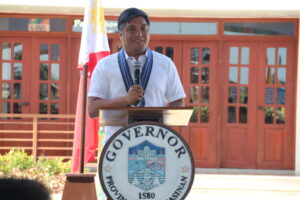
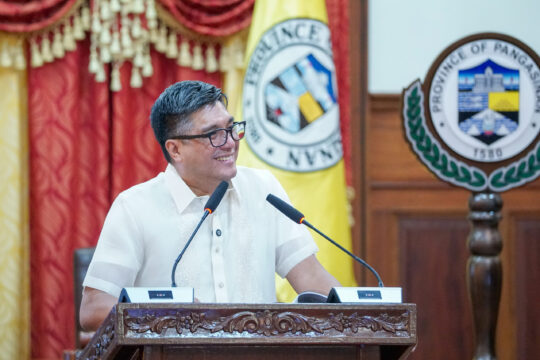
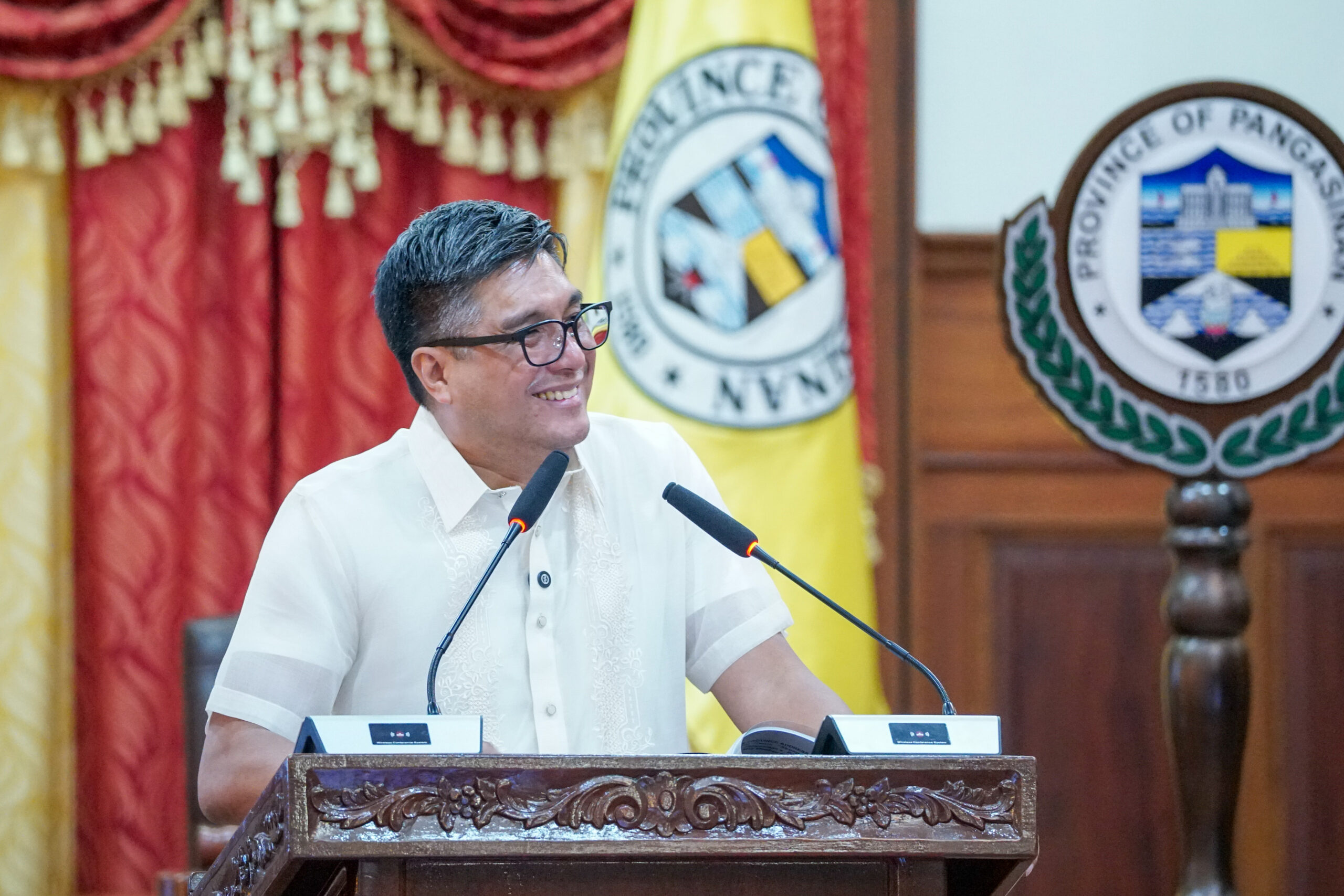
LINGAYEN, Pangasinan—Governor Ramon “Mon-Mon” V. Guico III delivered his fourth State of the Province Address (SOPA) this April 8, 2026 at the Sangguniang Panlalawigan Session Hall, Capitol Building in Lingayen, Pangasinan.
With the central theme “Strong Political Will and Vision Driving Pangasinan’s Progress: Mas Handa, Mas Matatag, at Mas Matibay ang Paninindigan,” the report focused on the following points: infrastructure and tourism, employment and education, socioeconomic performance, agriculture, disaster risk reduction, social services, healthcare, and good governance. For this year’s State of the Province Address, the speech was written independently by a team that usually works alongside the governor, as he wanted an unbiased view of the state of Pangasinan under his administration.
Among these key areas, healthcare evidently takes precedence under Gov. Guico’s administration. Citing the need for good health programs for a stable state of economy, he implemented free hospitalization across all the 14 provincial hospitals in Pangasinan. “It’s what you call universal health care—and it’s a law,” said Gov. Guico who is confident that this program is “very very much sustainable” as there is already a ₱3.1 billion budget allocated for this, drawn from 20% (₱1.6 billion) of the province’s annual budget (₱8.3 billion) and the provision (₱3.1 billion) from Philippine Health Insurance Corporation (PhilHealth).
There has been a staggering increase of inpatients and outpatients among these provincial hospitals, showing that more Pangasinenses are receiving healthcare and are being cured of diseases before they become life-threatening. In 2024, there was a recorded number of 114,602 inpatients and 521,814 outpatients; meanwhile, in 2025, there had been 120,069 inpatients and 657,976 outpatients.
As further proof, Pangasinan was hailed as a national health champion by the Department of Health in 2025, and brought home 5 awards—namely: Best Local Investment Plan for Health Implementer (1st Place), UHC Achievement Award (2nd Place), Palbayani Award for Malaria-Free Province, Palbayani Award for Immunization Champions, and 100% Swab-Compliance Award for Measles Surveillance.
The importance of infrastructures for different uses was also highlighted. In his speech, Gov. Guico emphasized that foundations are vital for the development and future of Pangasinan. A notable example is the administration’s Capitol Redevelopment Project—particularly, the 11-storey Pangasinan Government Tower which is planned to hold more provincial offices and is now 44.41% accomplished. With a base depth of 60m, Gov. Guico emphasized the significance of a strong foundation, not just for safety, but for the security of Pangasinan’s future.
“You don’t see it now … but we are building for the future. We ensure [na] matibay ang pundasyon, na yung eleven-storey will hold up … that [building] symbolizes the greatness of the province … We lay the foundation of a progressive and sustainable governance today … in order to ensure a secure future for Pangasinan.”
Other features of the Capitol Redevelopment Project mentioned in the speech are the reflection pool and dancing fountains which Gov. Guico defends as the only free attraction site for the people. The idea of constructing an esplanade in Estanza was also mentioned in passing, further proving Gov. Guico’s plan to further accessible tourism to local and non-local tourists.
“Let’s make this Capitol Complex safe and walkable,” said Gov. Guico.
Education is another important venture in the eyes of the Guico Administration, as evidenced by the establishment and funding of the Pangasinan Polytechnic College (PPC) which provides free education as, per Gov. Guico: “no one should be left out.” This project, initiated under the administration, is targeted to admit 700 students in August 2026, on top of the 1,200 scholars it already houses in the present.
This endeavor of free education goes hand-in-hand with the desire to boost employment. In his speech, Gov. Guico proudly announced that the Center for Lifelong Learning (CeLL) under the PPC, which aims to produce skilled workers, has already produced 311 graduates in electrical installation—80% of which are now employed. In total, the administration has, so far, recorded a total of 10,204 Pangasinenses who are currently employed locally and abroad.
In terms of agriculture, the Gov. Guico reminisced how his administration strived to revive the second largest salt farm in the Philippines located in Bolinao. After reopening in 2023, the farm—now dubbed as the Pangasinan Salt Center (PSC)—has since seen a rise in salt production. From making ₱10,379,919 in sales in 2024, sales increased to ₱23,248,445 sales from producing 8,100 metric tons of salt.
Aside from the PSC, the Bangus Breeding and Hatchery Center in Bolinao was also recently established to boost local bangus production. And the three provincial warehouses with multi-purpose drying pavements—located in the municipalities of Bugallon, Sta. Barbara, and San Quintin—are nearing completion.
Gov. Guico admitted that the energy crisis had been unexpected; and while there was no direct preemptive preparation, Pangasinan had been prepared through the investment and establishment of infrastructures—as well as by keeping basic services open and furthering its environmental efforts, such as the green canopy program which has already planted around 500,000 seedlings out of the goal to plant 1 million trees.
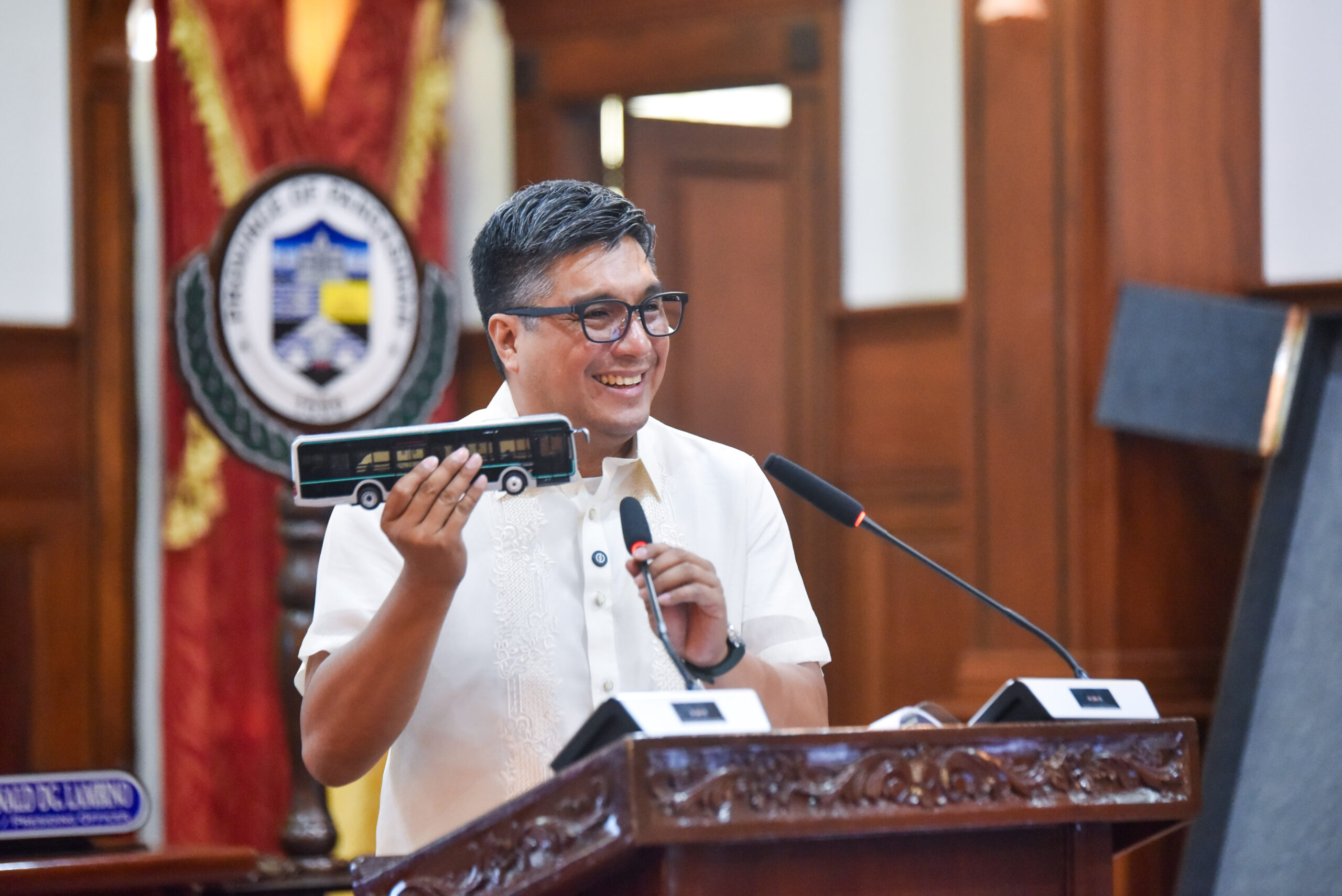
In response to the travelling issues brought forth by the unforeseen energy crisis, Gov. Guico proposed harnessing the power of the sun to fuel mass transportation. During SOPA 2026, Gov. Guico revealed his administration’s newest, “very ambitious” endeavor: the Electric Vehicle Bus Rapid Transit (EV-BRT). This project features 12 meter, 100% electric buses with low floors and a 40-person sitting and 40-person standing capacity. These vehicles will be cruising the outer lanes of what are currently 5 proposed travel routes passing through selected Central and Eastern Pangasinan municipalities in which strategically-located bus stops will be erected. With 5 units arriving within the next 4-5 months, Gov. Guico hopes to launch the EV-BRT within the year.
These accomplishments, Gov. Guico says, are rooted in the hard work of the 7,125 provincial employees from the capitol to the 14 provincial hospitals. He also gave thanks to “the continued trust of our kababayans. Lahat ng ito ay hindi lang dahil sa galing, ngunit dahil sa isang gobyernong may puso… Tapat at matibay na paninindigan sa ating probinsya… Ang serbisyong magaling ay magpapatuloy. Maraming salamat po, Pangasinan—Ang galing.”
This public affair, held at the Sangguniang Panlalawigan Session Hall, was attended in-person by Vice Gov, Hon. Mark Ronald Lambino and a handful of district board members—namely: Hon. Apolonia Bacay, Hon. Napoleon Fontelera Jr.; Hon. Shiela Marie Baniqued, Hon. Vici Ventanilla, Hon. Marinor De Guzman, Hon. Jerry Rosario, Hon. Rose Apaga, Hon. Nicholi Jan Louie Sison, Hon. Noel Fernando Bince, Jr., and Hon. Martin Raul Sison II. Other mentioned attendees include Provincial Legal Officer Atty. Baby Ruth Torre, Provincial Assessor Atty. Geronimo Abad, the Provincial Accounting Office OIC, and Congressman Mark Cojuangco.
Aside from the in-house audience, the event also saw an influx of virtual attendees—from other provincial offices and local government units—via zoom. Meanwhile, the public had the option to watch through a Facebook livestream which lasted nearly two hours and remains accessible as of writing. This unique “hybrid” mode was implemented in light of the global energy crisis.
/IMTI
Photos: Pangasinan Information and Media Relations Office (PIMRO)